Golf Shoulder: When Your Swing Starts Asking for Something Different
There is something wonderfully strange about golf.
You can spend four hours outside, surrounded by trees and grass and birds, moving at what appears to be a leisurely pace—and somehow come home feeling like you have been in a small athletic contest with yourself.
Then you notice your shoulder.
Maybe it is a dull ache after eighteen holes. Maybe reaching into the back seat has suddenly become interesting. Maybe you feel it during your backswing, your follow-through, or that particular moment when you are convinced that this is finally going to be the drive of your life.
Or maybe it has been quietly getting worse for months.
Golf shoulder doesn't always arrive with a dramatic injury. Often, it begins as a whisper.
And fortunately, a whisper is a lot easier to work with than a shout.
Golf is an athletic movement
Golf has a reputation for being gentle exercise. And in some ways, it is. Walking several miles around a course can be wonderful movement. There is plenty of time between swings. You aren't sprinting from one end of the field to another.
But the golf swing itself is a remarkably coordinated movement.
Your feet meet the ground. Your hips rotate. Your torso turns. Your shoulder blades move. Your arms travel through space. Your wrists release. And then, ideally, a small white ball goes somewhere you intended it to go.
All of this happens remarkably quickly.
The repetitive rotational nature of the golf swing places stress on the shoulders, hips, spine and forearms. When strength, mobility, recovery, or mechanics don't quite match the demands being placed on the body, irritation can gradually accumulate.
This doesn't mean your body is failing.
It may simply mean the demands have changed.
And that is actually good news.
Because demands can change again.
Your shoulder is not just a shoulder
The shoulder is an interesting piece of engineering.
The joint itself is relatively mobile, which is wonderful when you want to reach, throw, swing, climb, garden, swim, or scratch an itch in a place that seems specifically designed to be difficult to reach.
But mobility comes with a price.
The muscles and tendons surrounding the shoulder—including the rotator cuff—help stabilize and control that movement. Rotator cuff problems can produce pain, weakness, and reduced range of motion, and they can develop gradually rather than from one obvious accident.
And the shoulder doesn't operate alone.
Your neck, upper back, shoulder blade, ribs, trunk, hips and even your feet participate in the golf swing.
This is one of the things I love about working with bodies.
The place that hurts isn't always the whole story.
Sometimes the shoulder is the messenger.
What if your shoulder is actually giving you useful information?
We have a tendency to think of pain as an enemy.
Something has gone wrong.
Something needs to be fixed.
Make the pain stop and get back to normal.
But pain can also be information.
Perhaps you've increased your golf suddenly after a winter away from the course. Perhaps you've been playing three times a week instead of once. Perhaps you've changed your swing, your clubs, or your training routine.
Or perhaps your body has simply changed—as bodies tend to do.
That last one is particularly important.
Getting older doesn't mean we have to stop doing the things we love. But it does mean that the body we bring to the golf course at sixty may need a slightly different strategy than the body we brought at thirty.
That isn't failure.
That's adaptation.
The goal isn't simply to have a pain-free shoulder
Imagine your shoulder feels better.
Wonderful.
But what do you actually want to do with it?
You want to play eighteen holes without thinking about it.
You want to reach into the golf bag.
You want to swing without guarding the movement.
You want to practice your short game.
You want to walk the course with your friends.
You want to keep playing next year.
And the year after that.
This is an important distinction in recovery.
The goal isn't merely less pain.
The goal is more life.
So what actually helps?
There isn't one magical exercise, massage technique, stretch, brace, or treatment that fixes every shoulder.
Shoulders are wonderfully individual creatures.
But there is encouraging evidence for active rehabilitation. Recent systematic reviews have found that exercise can improve pain, function, disability, and strength in people with rotator-cuff-related shoulder pain, although the research is heterogeneous and doesn't establish one universally superior exercise program.
In other words:
The shoulder generally benefits from being used intelligently.
1. Build capacity
If your shoulder has been irritated for a while, the answer usually isn't to keep demanding exactly what it currently can't tolerate.
But complete avoidance isn't necessarily the answer either.
A good rehabilitation process gradually rebuilds strength and tolerance.
That might involve the rotator cuff. It might involve the muscles around the shoulder blade. It might involve the upper back or the rest of the kinetic chain.
The details depend on the person.
The larger principle is beautifully simple:
Give the body a little more capacity than it had yesterday.
Not all at once.
Not heroically.
Gradually.
2. Pay attention to your workload
One of the easiest ways to irritate a body is to ask it to do something it hasn't practiced doing lately.
The first warm weekend of spring arrives.
You haven't swung a club in three months.
Suddenly you're playing 36 holes.
Your shoulder may have some opinions about this.
A gradual return to activity, adequate recovery, warm-up, strength work, and attention to mechanics can all be useful parts of reducing the likelihood of overuse problems. Mayo Clinic's sports medicine guidance specifically emphasizes warm-up, strength, mechanics, and gradual increases in activity for golfers.
Your body likes consistency.
It also appreciates being warned.
3. Don't forget everything around the shoulder
Sometimes shoulder discomfort is best understood by looking beyond the shoulder itself.
How does your upper back move?
Can your shoulder blade move freely?
What happens when you rotate your torso?
How much work is your lead arm doing compared with your trail arm?
How is your grip?
What does your neck do during the swing?
What happens when you take the club overhead?
The body is a conversation between parts.
Sometimes changing the conversation somewhere else makes the original complaint much quieter.
Where does massage fit?
This is where I think massage can be particularly interesting.
Massage isn't a magic eraser.
It can't repair a torn tendon or substitute for appropriate medical evaluation or rehabilitation.
But skilled bodywork can be useful when you're dealing with muscular tension, restricted movement, soreness, or the accumulated workload that comes with repeatedly asking your body to perform a particular movement.
It can also give you something that is surprisingly difficult to obtain in modern life:
a few minutes to actually pay attention to your body.
Where does the shoulder feel restricted?
Does one side feel different from the other?
What happens when you breathe and let the upper back soften?
Does your arm move differently after the surrounding muscles have relaxed?
These aren't necessarily problems to be solved immediately.
They're things worth noticing.
And sometimes noticing is the beginning of changing.
The older golfer has an advantage
This may be one of my favorite things about working with active adults.
Experience counts.
A younger golfer may have more raw physical capacity, but an experienced golfer often knows something much more valuable:
They know themselves.
They know their swing.
They know what a good day feels like.
They know when something is unusual.
They know what activities they want to keep doing.
And they have usually learned that the body doesn't respond particularly well to being bullied.
There is a kind of wisdom that comes with having inhabited your body for several decades.
You begin to realize that strength isn't everything.
Mobility matters.
Recovery matters.
Awareness matters.
And consistency matters enormously.
Your body is not your opponent
Perhaps this is the biggest reframe I would offer.
Your shoulder isn't necessarily something standing between you and golf.
It may actually be part of the process of figuring out how you want to keep golfing.
Maybe you need more strength.
Maybe you need more mobility.
Maybe your workload needs adjusting.
Maybe your swing needs another set of eyes.
Maybe you need a physical therapist or physician to figure out exactly what is happening.
Maybe you simply need some attention to the muscles that have been working hard for you.
Probably, it isn't one thing.
Bodies rarely are.
And that's okay.
We don't need to reduce the body to a single problem in order to care for it.
Keep playing
There is something beautiful about wanting to continue doing something as you get older.
Golf is one of those activities that can follow you through many seasons of life.
Your swing may change.
Your clubs may change.
Your distance may change.
Your body will certainly change.
But there is no reason that change has to mean giving up participation.
Sometimes it means becoming more curious.
More attentive.
More deliberate.
Maybe the question isn't:
“How do I get my shoulder back to the way it used to be?”
Maybe the better question is:
“What does my shoulder need from me now?”
That is a much more interesting question.
And it leaves a lot of room for possibility.
The shoulder is talking. Let's listen.
If golf shoulder pain is keeping you from playing, practicing, or enjoying your time on the course, you don't necessarily need to choose between ignoring it and giving up golf.
There are many pieces to the puzzle.
Strength.
Mobility.
Technique.
Recovery.
Workload.
Body awareness.
And sometimes, skilled hands.
At Open Way Healing and Massage in Durham, I work with active adults who want to understand their bodies and keep participating in the activities they love.
Because the goal isn't simply to have a shoulder that doesn't hurt.
The goal is to have a shoulder that helps you keep living your life.
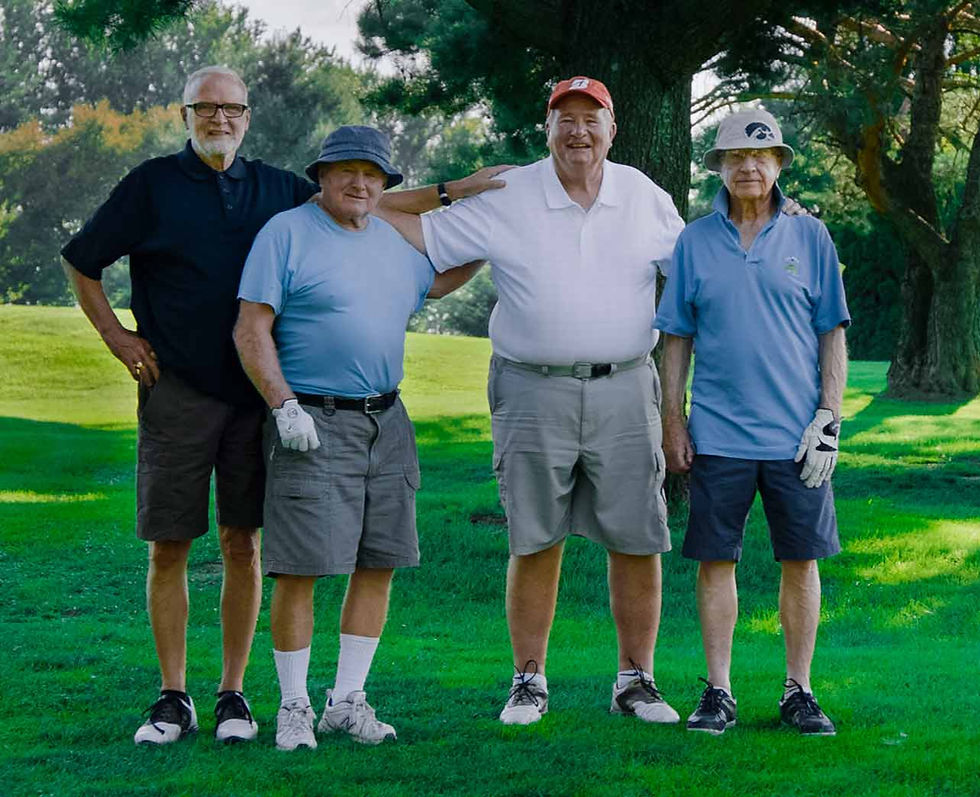
And maybe, if we're lucky, that next drive will go exactly where you meant to put it.


Comments