Deep Tissue Massage for Sports Recovery: Helping Your Body Come Back Stronger

There is a particular moment after a hard workout when you realize that perhaps you got a little carried away.
Maybe it was the pickleball tournament.
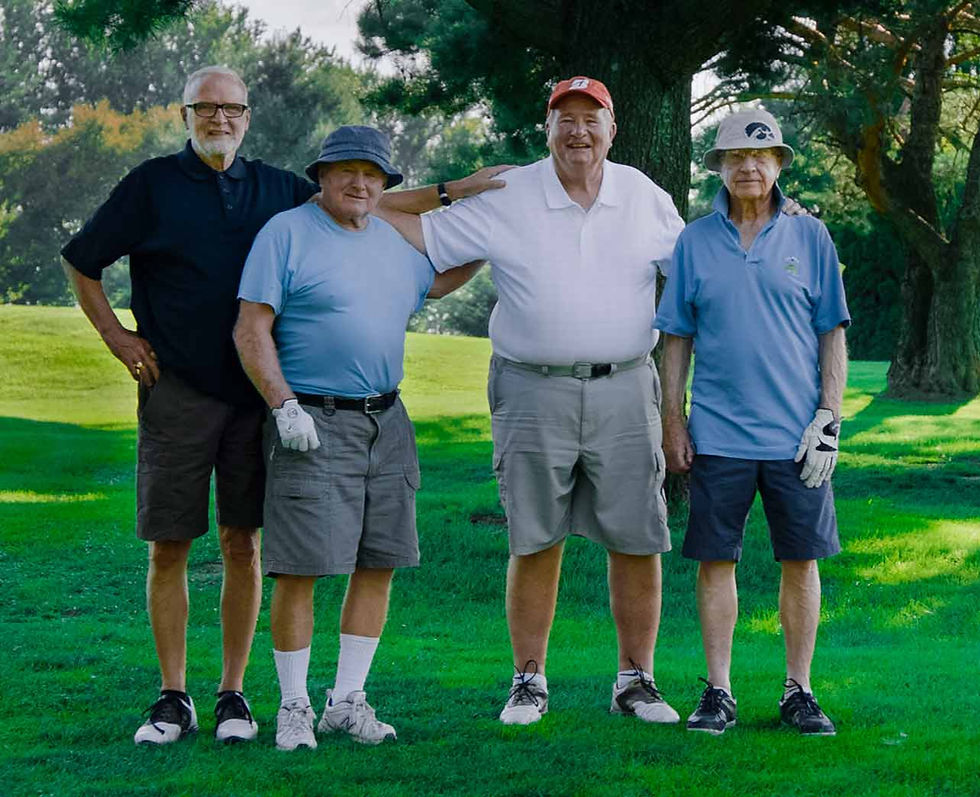
Maybe you played eighteen holes after telling yourself you were “just going to play nine.”
Maybe you finally got back on the tennis court after a long winter.
Maybe you spent Saturday in the garden, Sunday in the workshop, and Monday wondering why your shoulders have suddenly become so opinionated.
This is part of being an active human being. We ask our bodies to do interesting things. Sometimes our bodies answer by saying, That was fun. Let's talk about it tomorrow.
That conversation is where recovery begins.
And deep tissue massage can be one useful part of that conversation.
Recovery isn't the same thing as doing nothing
We sometimes imagine recovery as the opposite of exercise.
Exercise is the work. Recovery is lying on the couch. And while rest absolutely matters, recovery is actually a much more interesting process.
Your body is constantly responding to what you ask of it.
You stress a muscle.
You challenge a joint.
You repeat a movement hundreds of times.
You lift something heavier than usual.
You run farther.
You swing a racket or golf club again and again.
Then your body gets to work adapting.
Sleep matters. Nutrition matters. Hydration matters. Appropriate training matters.
And sometimes, hands-on bodywork can help you feel better while that process is happening.
That last part is important.
Massage isn't recovery itself. It is one tool that can support recovery.
What does “deep tissue” actually mean?
Deep tissue massage has acquired a bit of a reputation.
For some people, “deep tissue” means the therapist finds the deepest possible layer of muscle and attacks it with the enthusiasm of a lumberjack.
I don't think that's particularly useful.
Deep tissue isn't supposed to be a contest between your pain tolerance and my elbows. The word deep should describe an approach, not a competition. Sometimes deeper pressure is appropriate. Sometimes it isn't. Sometimes a slow, sustained pressure helps a muscle relax. Sometimes broad compressions are more useful. Sometimes working around an area rather than directly on the sore spot produces a better response. And sometimes the best thing a therapist can do is less.
Good bodywork is responsive.
The tissue tells us something.
The client tells us something.
We adjust.
So what happens after hard exercise?
If you've ever experienced delayed-onset muscle soreness—DOMS—you know the strange phenomenon. You finish your workout feeling pretty good. Then the next day you discover that sitting down has become an advanced athletic maneuver. DOMS commonly develops after unfamiliar or strenuous exercise and tends to be most noticeable during the following one to three days.
Research suggests massage can modestly reduce this post-exercise soreness. A systematic review and meta-analysis found reductions in DOMS following massage at 24, 48, and 72 hours after strenuous exercise, although the studies had limitations and the size of the effect varies.
Another systematic review of 29 randomized studies found small benefits for flexibility and DOMS, but did not find evidence that sports massage directly improves strength, sprinting, jumping, endurance, or fatigue.
I actually find this distinction encouraging. Because it gives us a more honest picture of what massage is good at.
Massage doesn't need to turn you into a better athlete overnight to be valuable.
Sometimes helping you feel a little less sore and a little more comfortable in your body is enough.
The body isn't a machine with a reset button
One of my favorite things about working with active people is discovering how differently everyone responds to the same activity.
Two people can play the same tennis match. One feels great afterward. The other wakes up the next morning feeling like someone replaced their legs with wooden fence posts.
Why?
Because bodies aren't machines.
Your training history matters.
Your sleep matters.
Your age matters.
Your stress level matters.
Your previous injuries matter.
Your movement patterns matter.
And sometimes you simply had a really ambitious Saturday.
This is why I don't think of massage as “fixing” a body.
I think of it as listening to a body.
Where deep tissue massage can fit into recovery
1. Reducing the experience of soreness
This is probably the most straightforward place where the evidence supports massage.
If you've worked hard and your muscles are sore afterward, massage may reduce the intensity of that soreness.
That doesn't mean the massage magically erased the effects of your workout.
It means the experience of recovery may be a little more comfortable.
And comfort matters.
When your body hurts less, ordinary movement can become easier.
You may feel more willing to walk, stretch, practice gentle movement, or simply go about your day.
2. Restoring a sense of movement
Athletes often describe recovery in terms of stiffness.
“I just don't feel loose.”
“My shoulder feels stuck.”
“My legs feel heavy.”
“My hips don't want to move.”
Massage has been associated with small improvements in flexibility and range of motion in some studies.
But I think there's something more interesting happening here than simply making a muscle “longer.”
Sometimes we become very aware of our bodies after strenuous activity.
We notice asymmetry.
We notice tension.
We notice that one shoulder moves differently from the other.
That awareness can be useful.
Massage gives us an opportunity to explore those sensations rather than simply ignoring them.
3. Helping you feel recovered
There is also the subjective side of recovery.
How recovered do you feel?
That isn't a trivial question.
Research reviews have found associations between massage and improved relaxation, mood, and perceived recovery, even when measurable athletic performance doesn't immediately change.
And anyone who has ever finished a demanding week, received a good massage, and walked back into the world feeling like themselves again understands this intuitively.
Sometimes the nervous system needs a chance to exhale.
The body has been doing.
Now it gets to receive.
4. Giving you a better relationship with your body
This may actually be my favorite benefit.
When you're training regularly, it is remarkably easy to treat your body as a vehicle for accomplishing things.
Run farther.
Hit harder.
Lift heavier.
Swing faster.
Play longer.
Get the personal record.
The body becomes the thing that carries you toward the goal.
Massage reverses the relationship for a little while.
You don't have to accomplish anything.
You don't have to perform.
You get to notice.
Where am I holding tension?
What feels different today?
What happens when I breathe here?
Does this shoulder move differently?
Is that soreness familiar?
Is this pain something I should investigate?
Those questions can make an athlete more informed.
And an informed athlete is often a more adaptable athlete.
Deep tissue isn't supposed to hurt as much as possible
Let's talk about something important.
A good deep tissue massage does not need to be brutal.
There is a persistent cultural idea that therapeutic massage should hurt in order to work.
I don't subscribe to it.
There may be moments of intensity.
There may be tenderness.
There may be a sensation that feels productive or interesting.
But pain is not proof of effectiveness.
More pressure isn't automatically better pressure.
The goal is to create an appropriate stimulus for the person in front of me.
That might mean deep pressure.
It might mean moderate pressure.
It might mean slow work.
It might mean broad compression.
And sometimes it means backing off.
Your body doesn't give bonus points for suffering.
Massage isn't a substitute for training
This is another distinction worth making.
If you want to become stronger, you need to train.
If you want to improve your golf swing, you need to practice.
If you want to rehabilitate an injury, you may need specific exercises and guidance from a physical therapist or other healthcare professional.
Massage cannot do those things for you.
The research doesn't support the idea that sports massage is a shortcut to improved athletic performance.
But perhaps that's actually freeing.
Massage doesn't have to be everything.
It just has to be useful.
It can sit alongside strength training, mobility work, good sleep, intelligent programming, nutrition, and rest.
A tool doesn't have to do every job to be worth having.
Recovery is where adaptation happens
This is the part I find most fascinating.
We tend to celebrate the workout.
The run.
The match.
The round of golf.
The heavy lift.
The difficult hike.
That's where the story feels exciting.
But the body doesn't become more capable simply because we demanded more from it.
The adaptation happens afterward.
The body takes the information we gave it and figures out what to do with it.
In that sense, recovery isn't an interruption to training.
Recovery is part of training.
And learning how to recover well may become increasingly important as we get older.
Not because getting older means becoming fragile.
Quite the opposite.
Because an experienced athlete can become remarkably good at listening.
You begin to recognize the difference between “I worked hard” and “something doesn't feel right.”
You learn when to push.
You learn when to back off.
You learn that consistency usually beats heroics.
And you learn that taking care of your body isn't separate from being an athlete.
It is part of being one.
The goal is not to recover so you can punish yourself again
There's a funny trap in sports culture.
We recover so that we can train harder.
Then we train harder so that we need to recover.
And around we go.
Sometimes that's appropriate. But I think there is another possibility. Maybe recovery is also about enjoying the body you have.
The runner who wants to enjoy the trail.
The golfer who wants to walk eighteen holes with his friends.
The pickleball player who wants to keep playing with her daughter.
The tennis player who wants to compete in the local league.
The weekend gardener who wants to wake up Monday morning and still be able to reach for the coffee cup.
These are not small goals.
This is the reason we move our bodies in the first place.
We want to participate in life.
Deep tissue massage is one piece of the puzzle
I don't think massage is magic. I think the human body is already doing something pretty magical. My job is to help you pay attention to it.
Deep tissue massage can be one useful part of sports recovery—particularly when you're dealing with muscular soreness, stiffness, or simply the accumulated tension that comes with asking your body to perform.
But the bigger picture matters.
Train intelligently.
Recover deliberately.
Sleep.
Eat.
Move.
Pay attention.
Ask for help when something doesn't make sense.
And occasionally, let someone else take care of you for an hour.
Because being strong isn't just about what your body can do.
Sometimes strength is also knowing how to listen when your body asks for something different.
At Open Way Healing and Massage in Durham, I work with active adults who want to keep doing the things they love—tennis, pickleball, golf, hiking, lifting, gardening, and all the wonderfully physical activities that make life interesting.
The goal isn't to make you invincible.
It's to help you stay in the game.

Comments